
Sorry, but your login has failed. Please recheck your login information and resubmit. If your subscription has expired, renew here.

September-October 2025
This issue of Supply Chain Management Review explores the technologies, strategies, and leadership practices shaping next-generation supply chains. Features include Gartner’s 2025 Top 25 Supply Chains and an in-depth look at AI-powered chatbots transforming procurement into faster, smarter cognitive procurement. Readers will also find guidance on strengthening cybersecurity, making the financial case for resilience investments, fixing costly disconnects in production planning, and embedding supply chain thinking across every business function. From sports-inspired lessons in teamwork to risk registers that prioritize action, this issue delivers… Browse this issue archive.Need Help? Contact customer service 1-508-503-1313 More options
While historically often neglected, the last five years have shown that supply chain management (SCM) is mission-critical for many firms. From pandemic disruptions to geopolitical shocks and bottlenecks after natural disasters, many companies have learned the hard way that supply chains (SC) are not just operational workhorses, but instead key enablers of resilience, agility, brand recognition, and growth. However, recognizing SCM’s importance does not automatically translate into smarter decision-making of non-SCM departments and the company overall. While analytics and data are often seen as key enablers for such decisions, more tacit knowledge and management is required: Organizations must truly embed SC thinking into everyday decisions across all functions.
SC
MR
Sorry, but your login has failed. Please recheck your login information and resubmit. If your subscription has expired, renew here.
September-October 2025
This issue of Supply Chain Management Review explores the technologies, strategies, and leadership practices shaping next-generation supply chains. Features include Gartner’s 2025 Top 25 Supply Chains and an… Browse this issue archive. Access your online digital edition.While historically often neglected, the last five years have shown that supply chain management (SCM) is mission-critical for many firms. From pandemic disruptions to geopolitical shocks and bottlenecks after natural disasters, many companies have learned the hard way that supply chains (SC) are not just operational workhorses, but instead key enablers of resilience, agility, brand recognition, and growth. However, recognizing SCM’s importance does not automatically translate into smarter decision-making of non-SCM departments and the company overall. While analytics and data are often seen as key enablers for such decisions, more tacit knowledge and management is required: Organizations must truly embed SC thinking into everyday decisions across all functions.
Ultimately, a range of departments beyond the supply chain function are involved in SCM decisions that are inherently cross-functional: They typically influence, and are influenced by, nearly every part of the business, including the CEO. Yet too often functions like sales, research & development, or finance make decisions without understanding their impact on the supply chain both up and downstream. A last-minute promotion, a product design change, or a new working capital initiative can unravel even the best supply chain plans. At the same time, key SCM decisions, such as network strategy, inventory choices or sourcing modes, have significant implications for other functions, shaping service levels, cost structures, and customer experiences (see Figure 1).
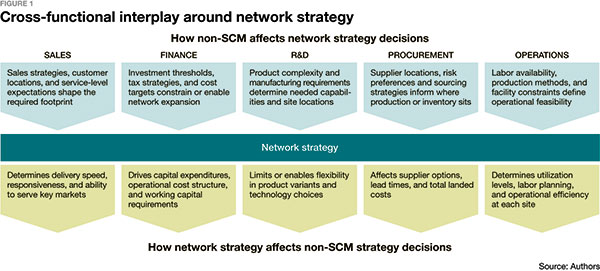
What many businesses lack is a shared understanding of how the SC works, how decisions in one area influence or constrain others, and how deeply these dynamics are tied to the firm’s overall success. This article offers a practical guide to help non-SCM teams and their leaders understand the true value of SCM and engage more effectively across functions.
Why SCM is often poorly understood
Let’s be honest: Many people working in non-SCM functions have no clue about SCM. There are many real-life anecdotes: Sales promises a delivery date to a customer without asking about manufacturing capacity constraints. R&D designs a custom part that no one can source. Product management rolls out six new package sizes and five new colors without considering the increased complexity in the SC. We find three common reasons for this behavior that go beyond mere ignorance.
- Businesses operate under severe time constraints with functional teams constantly pressured to meet their specific key performance indicators. With so much on their plate, taking time to understand how the SC works (or how their decisions affect it) often feels like a luxury they cannot afford. As SCM is rarely seen as urgent until something breaks, SC considerations are routinely deprioritized in managers’ daily work.
- It is common that sales, R&D, and finance lack SCM exposure and therefore deep knowledge. Many terms and concepts are unknown to professionals who have not been exposed to how SCs work. Concepts like lead time variability, safety stock, or capacity planning can be unfamiliar or misunderstood. Terms like MOQ, ATP, or OTIF combined with the often inward-facing communication style of SCM-teams make it even harder for “outsiders” to engage. However, without a basic understanding, it is difficult to grasp how seemingly minor decisions can disrupt the SC. This knowledge gap is not about intelligence; it’s about exposure and the absence of a shared language.
- Inherent challenges in SCM are indeed difficult to understand—even for those who try. SCM requires an end-to-end understanding as decisions in one area often have cascading effects across the entire chain. Moreover, SCM decisions are non-linear: small changes in demand or supply conditions can lead to disproportionately large disruptions or cost swings. Further, they are ambiguous: relationships between cause and effect are often unclear, and trade-offs rarely come with simple answers. This combination of linked, non-linear and ambiguous makes SCM fundamentally harder to grasp than many other business domains.
SCM is both structurally complex and cognitively demanding, which requires cognitive investment, or its lack thereof often results in misunderstandings. Yet the consequences of this gap are real: misaligned decisions, avoidable disruptions, lost profit opportunities, and dissatisfied customers. That is why, in our view, building basic SCM fluency across the organization is not just helpful, but essential.
What everyone should know about SCM
For a long time, many businesses treated SCM as a secondary concern; merely an execution task to follow from the “real” work of product innovation and customer acquisition. Once R&D launched a brilliant new product and sales secured new business, SCM was expected to distribute it cheaply and without complications. But that view has changed. More and more companies now recognize that the SC should not just be seen as a cost center, but as a potential source of competitive advantage. SC powerhouses such as Apple, Amazon, P&G, and Unilever have demonstrated that superior SC capabilities can be a strategic differentiator—even if this might (initially) come at higher costs.
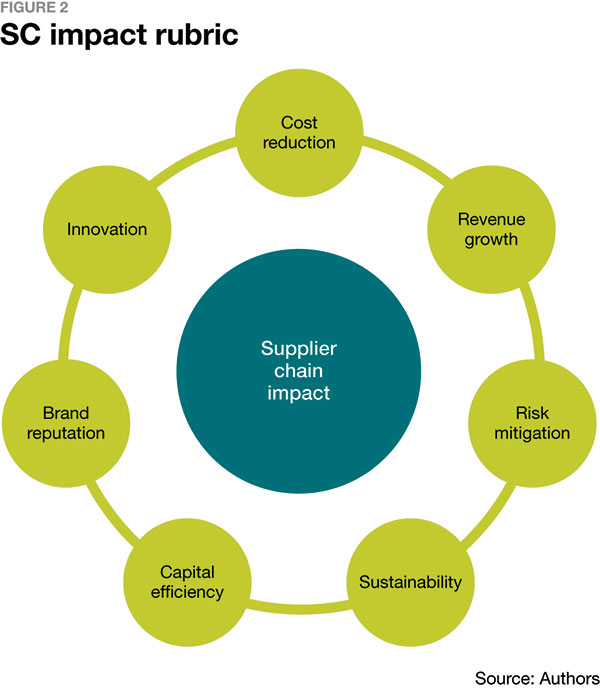
This mindset shift from perceiving SCM as a cost center to recognizing it as a strategic lever is reflected in the SC impact rubric (see Figure 2). In many companies, the SC contributes far beyond operational cost reduction, though this remains an important consideration. SCM can enable revenue growth by ensuring product availability and enabling faster market entry. For example, Shein’s ultra-fast fashion model uses real-time demand data and digital manufacturing to launch new styles in days rather than weeks. Risk mitigation is another core contribution of SCM, which builds resilience into sourcing, production, and distribution networks. When natural disasters disrupted semiconductor supply, companies like Toyota avoided prolonged downtime by actively managing supplier networks through dual sourcing strategies and deep Tier 2 and Tier 3 visibility.
SCM is also central to sustainability. Unilever, for instance, reduced its environmental footprint through SC redesign and a strategic shift to recyclable materials. SCM enhances capital efficiency by optimizing inventory levels, working capital deployment, and asset utilization. As an example, P&G improved cash flow by starting to manage planning processes globally and synchronizing SC operations. Well-managed SCs further shape the brand reputation, particularly through consistent service and responsible sourcing. Patagonia, for example, embeds ethical SC practices and transparency into its brand promise, thus creating differentiation and trust. Finally, SCM enables innovation by creating operational flexibility to support modular designs, pilot-scale production, and rapid scaling. Tesla, for example, has redefined automotive SCM by vertically integrating key components like batteries and software, enabling faster innovation cycles and in-house control over critical technologies.
However, to unlock this strategic potential it is imperative for the other business functions to understand at least some basic SCM principles. This knowledge doesn’t require deep technical expertise, but it does require awareness of how decisions ripple across the end-to-end chain. Some SCM fundamentals are universal, such as understanding key tradeoffs. For example, lead times determine when products can be delivered, shaping customer expectations and launch plans. Inventory acts as a buffer against uncertainty avoiding stockouts but overstocking ties up capital. Large demand variations are increasing the need for buffer inventory. In this context, forecast accuracy becomes essential: inaccurate or overly optimistic forecasts can result in overproduction, excess inventory, or unmet demand. Poor forecasts also tend to amplify the bullwhip effect, where small shifts in customer demand cause increasingly large fluctuations in upstream orders. This leads to instability, supplier stress, and avoidable costs throughout the SC.
Equally important are the trade-offs between cost, service, and risks that SC managers constantly navigate. Offering faster delivery or holding more inventory may improve service levels but comes with financial and operational implications. Increasing product variety may boost sales but adds complexity and cost for planning and fulfillment. Similarly, sourcing from low-cost regions can reduce unit costs but may increase lead times and expose the business to greater risks. Without a shared understanding of such dynamics, even well-meaning choices in one business function can disrupt another. A firm-wide grasp of these basic SCM principles enables better alignment, faster response, and more resilient performance across the organization.
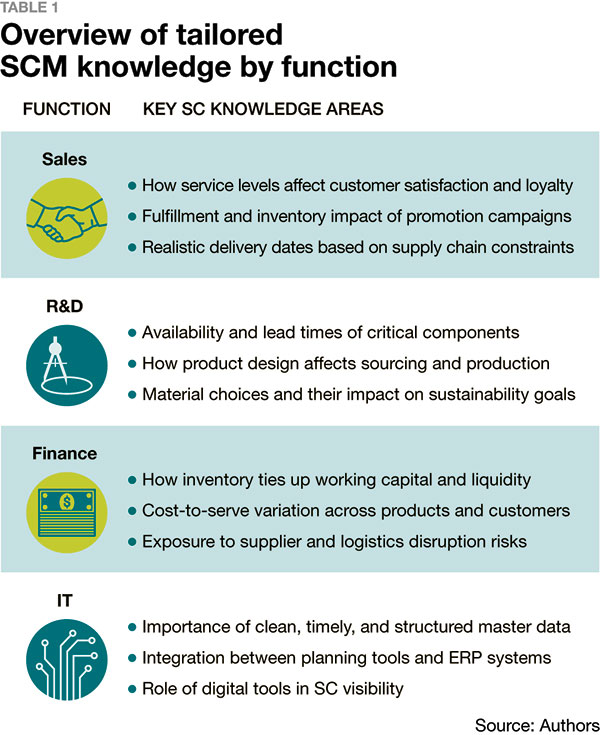
These SCM concepts are relevant to anyone in sales, R&D, finance, or marketing who interact with product availability, timelines, or service expectations. Other elements are more function specific (See Table 1). Sales and marketing need to understand what the SC can reliably deliver, how service levels are shaped, and the fulfillment implications of promotions or custom offerings. R&D must be aware of how design choices affect sourcing, manufacturability, and supply flexibility, especially when working with new or specialized components. Finance should understand how working capital, cost-to-serve, and risk exposure are influenced by SC decisions such as inventory levels or supplier terms. Finally, IT plays a crucial role through enabling data visibility, system integration, and digital tools that power SC planning and execution. Equipping each function with tailored SCM knowledge is critical for deepening understanding and enabling more informed, aligned decisions.
How to elevate SCM understanding
Supply chain managers must acknowledge the critical truth: non-SCM colleagues face challenges in understanding the supply chain. Expecting cross-functional alignment is unrealistic, and if SCM wants better collaboration, they must take the lead in making supply chain concepts more accessible, more visible, and more actionable across the business. That starts with knowing where your organization stands. A SC awareness maturity assessment (see Table 2) can help reveal blind spots across departments and indicate where targeted interventions e.g. trainings, playbooks, or workshops, are most needed.

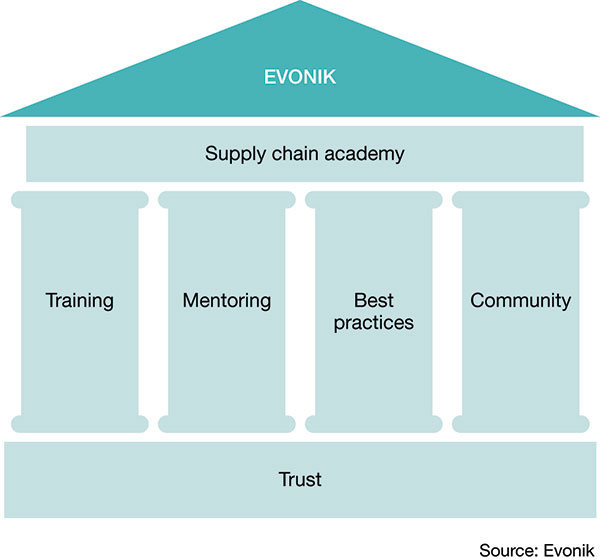
Creating short, engaging training modules is often the first step (see Evonik sidebar). But this is not about lecturing—it is about co-creating understanding. Invite other functions into conversations, use real examples, and tailor content to their decisions and KPIs. A sales manager doesn’t need a lesson in logistics theory. They need to know how lead time promises affect capacity needs and inventory levels. R&D needs to understand the sourcing implications of choosing a rare or long-lead-time component.
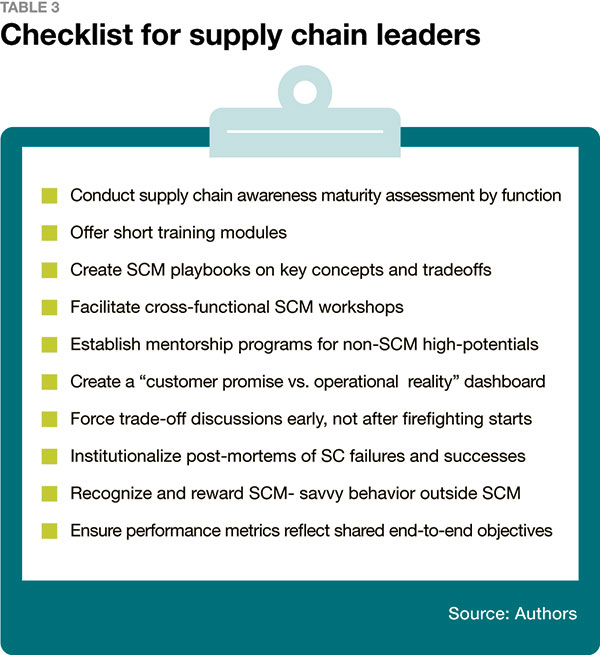
Playbooks translate SCM principles into practical, role-specific guidance that supports smarter decisions. Effective playbooks include one-page summaries on core concepts such as lead time, inventory, forecast accuracy, or the bullwhip effect, designed for quick reference and cross-functional accessibility. They should also include clear, visual illustrations of key trade-offs to help non-SCM teams understand the implications of their choices in everyday scenarios.
Workshops offer a hands-on opportunity to explore real trade-offs, aligning shared objectives, and foster cross-functional dialogue around common bottlenecks. When embedded in strategy sessions or team offsites, they help shift perceptions and bring SCM from the sidelines into the core of business planning.
Supply chain for non-SC executives at Evonik Industries
However, leaders of other business functions need to be convinced that their teams should spend time on this. Therefore, you need to showcase the benefits speaking their language e.g. “understanding SCM helps you make promises you can keep” or “visibility into supply constraints helps you prioritize the right market.” Framing SCM literacy as a way to create impact using the SC Impact Rubric by hitting revenue targets, avoiding rework, or improving customer experience makes the time investment far more compelling.
Once other functions start engaging with SCM principles, leadership must reinforce this shift. Mentorship is another underutilized lever for building that awareness. Pairing SCM leaders with high-potentials from functions like sales, R&D, or finance creates informal learning channels, fosters cross-functional empathy, and builds lasting connections. These relationships help non-SCM talent develop a better appreciation for how their decisions affect the broader value chain long before those decisions show up as problems in a KPI dashboard. To reinforce this mindset, trade-offs must be surfaced early—not when firefighting has already begun. Too often, SCM concerns only become visible once a plan unravels. Visual tools, such as dashboards comparing customer promises with operational realities, help make cost, service, and risk trade-offs tangible at the right moment when choices are still being made.
Equally important is learning from experience. Post-mortems of both SCM failures and successes should be institutionalized, not just to assign blame or celebrate performance, but to promote shared understanding. Analyzing what went wrong (or right) across planning, sourcing, manufacturing and delivery can help break down silos and prevent repeat mistakes. One important step could be to actively recognize and celebrate SCM-savvy behavior, especially when it comes from outside the SCM function. When a commercial team adjusts its offering based on lead time realities or a product development team reuses an existing component to improve availability, it sends a strong signal: supply chain awareness is noticed, appreciated, and valued across the organization.
Ultimately, awareness and appreciation are necessary but not sufficient. Sustainable cross-functional alignment requires shared incentives. As long as functions are measured against narrow, siloed KPIs, like volume sold or R&D speed to market, they will act accordingly. But when performance is tracked against end-to-end metrics, e.g. such as cost-to-serve, working capital, or on-time-in-full delivery, collaboration becomes more natural and more rewarding.
Conclusion
So why is it important that not just the SC geeks, but instead your entire business understand and live SCM? For a start, if they don’t, the other functions in your organization may become an “enemy” that unintentionally ruins your supply chain efforts. Too often, well-intended decisions in sales, R&D, or finance cause friction, inefficiencies, or breakdowns simply because SC implications were not sufficiently considered. That’s why building a shared understanding of SCM across the organization is not optional—it’s essential. This doesn’t mean turning everyone into a supply chain expert. It means to equip each function with the fluency needed to recognize interdependencies, appreciate trade-offs, and contribute constructively to cross-functional decisions.
When non-SCM teams understand the fundamentals, they are more likely to coordinate early, flag risks, and align their actions with broader supply chain goals. The result: fewer surprises, fewer bottlenecks, and more resilient, cost-effective operations. Organizations that invest in SCM awareness don’t just avoid problems; they unlock hidden value and potential. In today’s environment, that level of understanding isn’t a luxury—it’s a competitive necessity.
About the authors
Dr. Kai Hoberg is professor of Supply Chain and Operations Strategy at the Kühne Logistics University. He can be reached at [email protected].
Rico Merkert, Ph.D. is professor and chair in Transport and Supply Chain Management at the Institute of Transport and Logistics Studies at The University of Sydney. He can be reached at [email protected].
Marianne Jahre, Ph.D. is Dean of Research and professor in Operations Management at the Kühne Logistics University. She can be reached at [email protected].
SC
MR


More Supply Chain Management
- Managing human and AI teams across the supply chain
- AI won’t fix a broken supply chain foundation
- Stop moving boxes, start moving dollars: The new math of global supply chain velocity
- Consensus won’t cut it: Why assertive advocate CSCOs deliver sustained cost excellence
- Here comes the new supply chain: Is your organization ready?
- More Supply Chain Management
What's Related in Supply Chain Management
 Explore
Topics
Business Management News
- Innovators Netstock, Pickle Robot win NextGen Solution Provider awards
- Bigger trucks versus broken bridges and roads
- From salon to dock door: Repurposing scheduling software for inbound flow
- The biggest barrier to AI in supply chains isn’t technology
- Rebuilding a planning function around the physical world
- Why companies blame the wrong supplier … and miss the real failure
- More Business Management
Latest Business Management Resources
Subscribe

Supply Chain Management Review delivers the best industry content.

Editors’ Picks



